100 · Hellenistic & Roman
1st century CE
In magical papyri, glosses and administrative notes of the Roman era, scribes begin writing the Egyptian language in Greek letters, adding a handful of Demotic signs. These 'Old Coptic' experiments mature into the full script within a few generations.
ⲙⲉⲧⲣⲉⲙⲛ̀ⲭⲏⲙⲓ — The moment Egyptian meets the Greek alphabet — the precondition for everything written in Coptic afterwards.
180 · Early Christian
c. 180 CE
Under teachers like Pantaenus, Clement and Origen, Alexandria becomes a center of Christian scholarship in Greek — while the Egyptian vernacular of ordinary believers steadily rises in church life alongside it.
ⲙⲉⲧⲣⲉⲙⲛ̀ⲭⲏⲙⲓ — The bilingual crucible from which Coptic emerges as the church's own voice.
285 · Monastic era
c. 285 CE
Anthony gives away his possessions and settles in the eastern desert, drawing imitators within his lifetime. The monastic movement he inspired soon generates letters, accounts and teachings recorded in Coptic.
ⲙⲉⲧⲣⲉⲙⲛ̀ⲭⲏⲙⲓ — Monasticism made Coptic the language of a vast new literature.
320 · Monastic era
c. 320 CE
At Tabennisi, Pachomius organizes monks into a rule-governed community — the first cenobitic monastery. The federation that grew from it produced rules, letters and lives that rank among early Coptic prose's major monuments.
350 · Classical Coptic
4th century CE
Complete biblical books circulate in Sahidic, the Nag Hammadi library is copied, Manichaean psalms are translated, and Bohairic versions take shape. Coptic now writes scripture, liturgy, law, letters and contracts alike.
ⲙⲉⲧⲣⲉⲙⲛ̀ⲭⲏⲙⲓ — The classical age: every later dialect study looks back to this period.
465 · Monastic era
465 CE
Shenoute dies at an advanced age after leading the White Monastery federation for decades, leaving a corpus of sermons and canons unmatched by any other ancient author in size.
ⲙⲉⲧⲣⲉⲙⲛ̀ⲭⲏⲙⲓ — His Sahidic set a benchmark of classical literary Coptic.
850 · Arabicization
8th–10th centuries
After the Arab conquest (641), Arabic spreads through administration and scholarship; by the tenth century even church records appear in Arabic. Coptic recedes to the liturgy, family life and bilingual service books, while diglot Coptic-Arabic texts keep readers connected to both languages.
ⲙⲉⲧⲣⲉⲙⲛ̀ⲭⲏⲙⲓ — The great pivot: Coptic shifts from daily speech to heritage language.
1799 · Modern revival
July 1799
Soldiers digging fortifications near Rashid uncover a decree inscribed in hieroglyphs, demotic and Greek. The Greek text provides the key; scholars will need Coptic to read what lies behind it.
ⲙⲉⲧⲣⲉⲙⲛ̀ⲭⲏⲙⲓ — Coptic's living vocabulary was about to resurrect Egypt's oldest scripts.
1822 · Modern revival
September 1822
Champollion reads royal names on the Rosetta Stone and Philae obelisk, proving hieroglyphs record the Egyptian language. His command of Coptic was decisive: he recognized words like 'sun' and 'gifts' behind the signs and called Coptic 'the old Egyptian language preserved by the church'.
ⲙⲉⲧⲣⲉⲙⲛ̀ⲭⲏⲙⲓ — Coptic became the master key of Egyptology itself.
1908 · Modern revival
1908
Marcus Simaika Pasha founds the Coptic Museum in Old Cairo to gather Coptic artistic and manuscript heritage in one place; it was inaugurated on 14 March 1910 and grew into the world's largest collection of Coptic artifacts, today including codices of the Nag Hammadi library.
ⲙⲉⲧⲣⲉⲙⲛ̀ⲭⲏⲙⲓ — Manuscripts gathered here made classical Coptic visible to scholarship and the public alike.
1926 · Modern revival
1926 – 1936
Invited by Ragheb Moftah, the British musicologist Ernest Newlandsmith spends nine winters notating the orally transmitted liturgical repertory as sung by the blind cantor Mikhail El-Batanouny. The resulting folio volumes — preserved today in the Library of Congress — were the first systematic Western notation of the Coptic chant tradition.
ⲙⲉⲧⲣⲉⲙⲛ̀ⲭⲏⲙⲓ — The transcribed hymns carry the Bohairic liturgical text, preserving how each word is actually chanted.
1939 · Modern revival
1939
Walter Ewing Crum completes decades of work with A Coptic Dictionary, still the standard scholarly reference for word meanings across all dialects — and a foundation for this platform's dictionary entries.
1945 · Manuscript era
December 1945
Near the cliffs of Jabal al-Tarif, local farmers find thirteen leather-bound codices copied around the fourth century in Sahidic Coptic. Their texts transformed the study of early Christianity — and remain among the finest witnesses of classical Coptic prose.
ⲙⲉⲧⲣⲉⲙⲛ̀ⲭⲏⲙⲓ — An entire library in classical Sahidic, preserved by desert dryness for sixteen centuries.
1954 · Modern revival
1954
Scholars and clergy establish the Higher Institute of Coptic Studies in Cairo, systematizing the teaching of Coptic language, hymnology, art and history and training generations of Sunday-school teachers. Its music division, established by Ragheb Moftah, began the systematic recording of the liturgical repertoire.
ⲙⲉⲧⲣⲉⲙⲛ̀ⲭⲏⲙⲓ — Modern classroom teaching of Bohairic begins on an institutional footing.
1969 · Modern revival
1969
Pope Cyril VI sends Fr. Matta El Meskeen with twelve monks to revive the nearly abandoned Monastery of Saint Macarius in Wadi al-Natrun. Under his leadership the community grows from six elderly monks to about one hundred and thirty, shaping the course of modern Egyptian monasticism.
ⲙⲉⲧⲣⲉⲙⲛ̀ⲭⲏⲙⲓ — A living continuation of the desert-monastic world where Coptic prayer is chanted daily.
2005 · Modern revival
March 2005
Unicode 4.1 introduces a dedicated Coptic block (U+2C80–U+2CFF), separating Coptic letters from Greek once and for all. Reliable digital typesetting becomes possible, paving the way for fonts, apps and platforms like Metremnkeme.
ⲙⲉⲧⲣⲉⲙⲛ̀ⲭⲏⲙⲓ — The technical milestone behind every Coptic website and app today.
2010 · Modern revival
7 January 2010
As Christians were leaving the Church of Saint John the Beloved in Nag Hammadi, Minya Governorate, the congregation was attacked in a sustained armed assault from multiple vehicles and positions throughout the city. The attack killed 8 Copts and injured 11 others, in one of the most violent sectarian incidents in Egypt before the January 2011 Revolution.
2010 · Modern revival
31 October 2010
The massacre took place at the Syriac Catholic Church of Our Lady of Salvation in the Karrada district of eastern Baghdad. The first modest church was built on the site in 1952, and the current cathedral was constructed in 1968 after three years of building. Approximately 5,000 regular-attending families were affiliated with this cathedral alone, out of a total of approximately 14,000 Syriac Catholic families in Baghdad before the attack.
2011 · Modern revival
1 January 2011
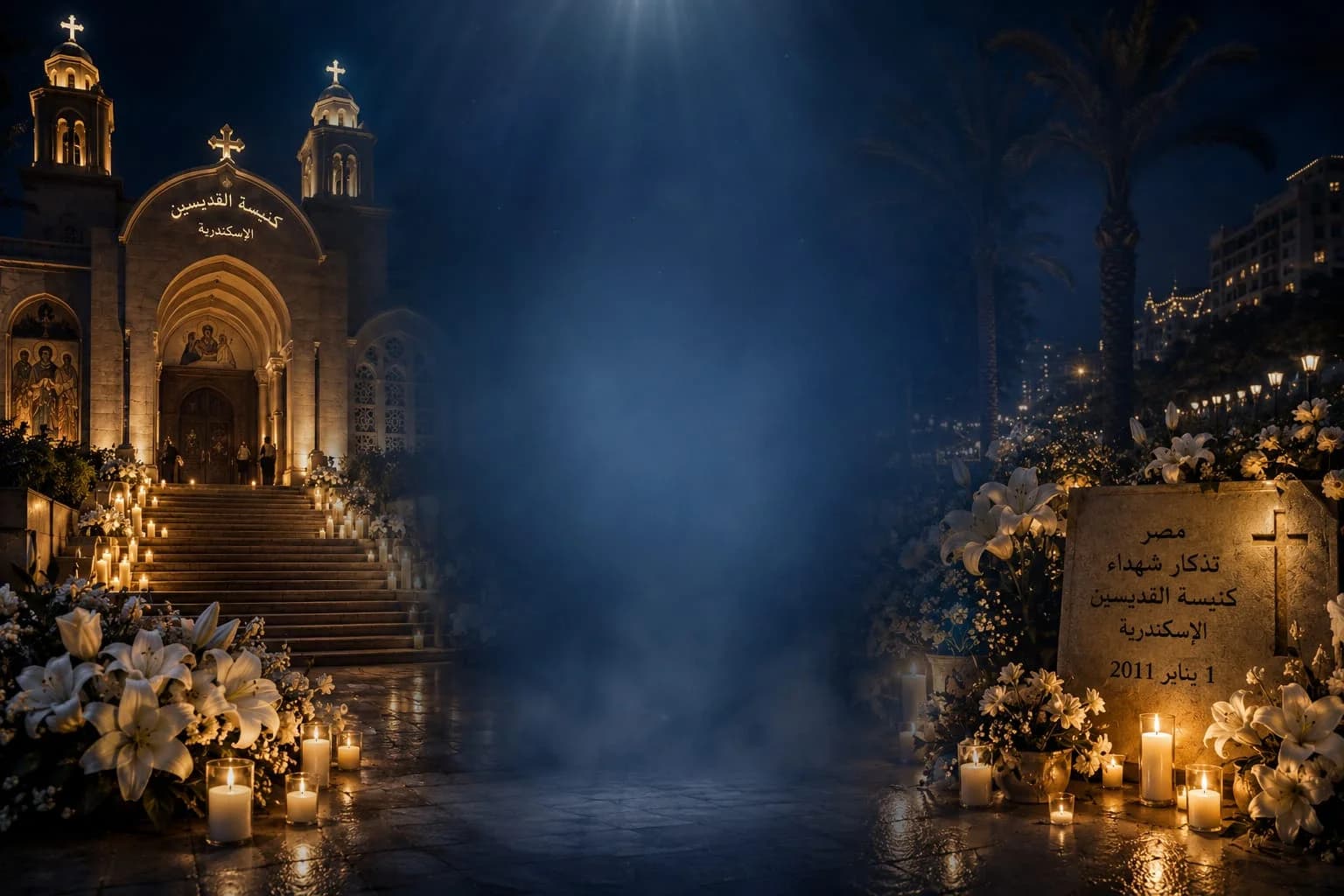
A terrorist bombing targeted the Church of Saints, the Apostle Mark and Pope Peter the Seal of the Martyrs in the Sidi Bishr district of eastern Alexandria, as worshippers were leaving the New Year's Eve liturgy. The explosion killed 23 people and injured approximately 97 others. This incident is considered the first terrorist bombing of this scale to target a church in modern Egyptian history.
2014 · Modern revival
2010s
The Coptic SCRIPTORIUM project releases openly licensed corpora with part-of-speech tagging and parsing, plus NLP tools. For the first time, computational methods can be applied to Coptic text at scale — Metremnkeme integrates them optionally through its adapter layer.
ⲙⲉⲧⲣⲉⲙⲛ̀ⲭⲏⲙⲓ — Coptic joins the world of open, machine-readable languages.
2015 · Modern revival
15 February 2015
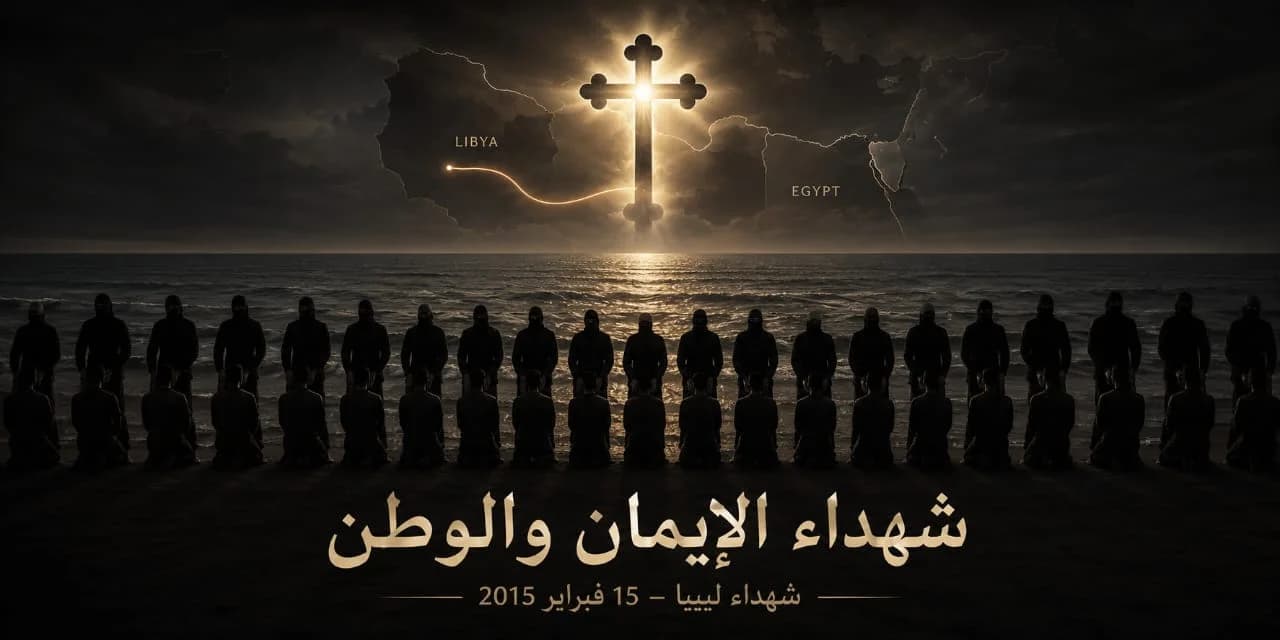
On 15 February 2015, the terrorist group ISIS published a video showing the beheading of 21 Christians held captive in Sirte, Libya — twenty of them Egyptian Copts and one from Ghana. Pope Tawadros II gave them the title 'Martyrs of the Faith' and canonized them as saints just one week after the incident, on 21 February 2015.
2016 · Modern revival
11 December 2016
During the Christmas Fast liturgy, a suicide bomber detonated himself inside the Church of Saint Peter (Anba Rouis Church) adjacent to the Coptic Orthodox Cathedral in Abbassia, Cairo, with an explosive vest weighing approximately 12 kilograms. The bombing killed 29 people, the majority of them women, and injured more than 31 others. ISIS claimed responsibility for the attack, which was the first to target this church in its history.
2017 · Modern revival
9 April 2017
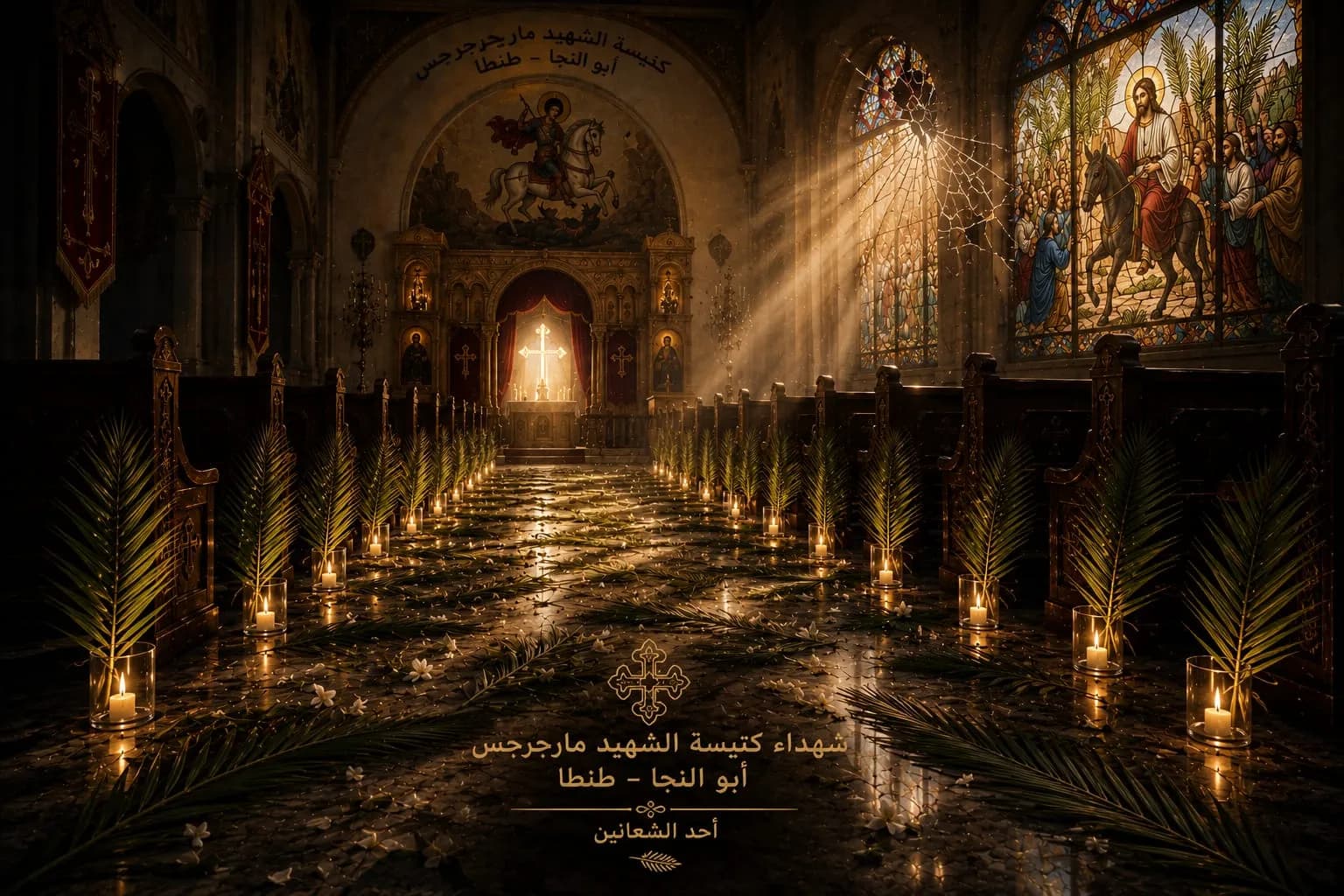
A suicide bomber detonated himself inside Mar Girgis (Saint George) Abu Naga Church in Tanta, Gharbia Governorate, during the Easter liturgy while the church was crowded with worshippers. The explosion killed 30 people and injured approximately 71 to 87 others. ISIS claimed responsibility for the attack, naming the perpetrator 'Abu Ishaq al-Masri.' A second bombing targeted the Coptic Orthodox Cathedral in Alexandria later that same day; the two attacks are collectively known as the 'Palm Sunday Bombings.'
2017 · Modern revival
26 May 2017
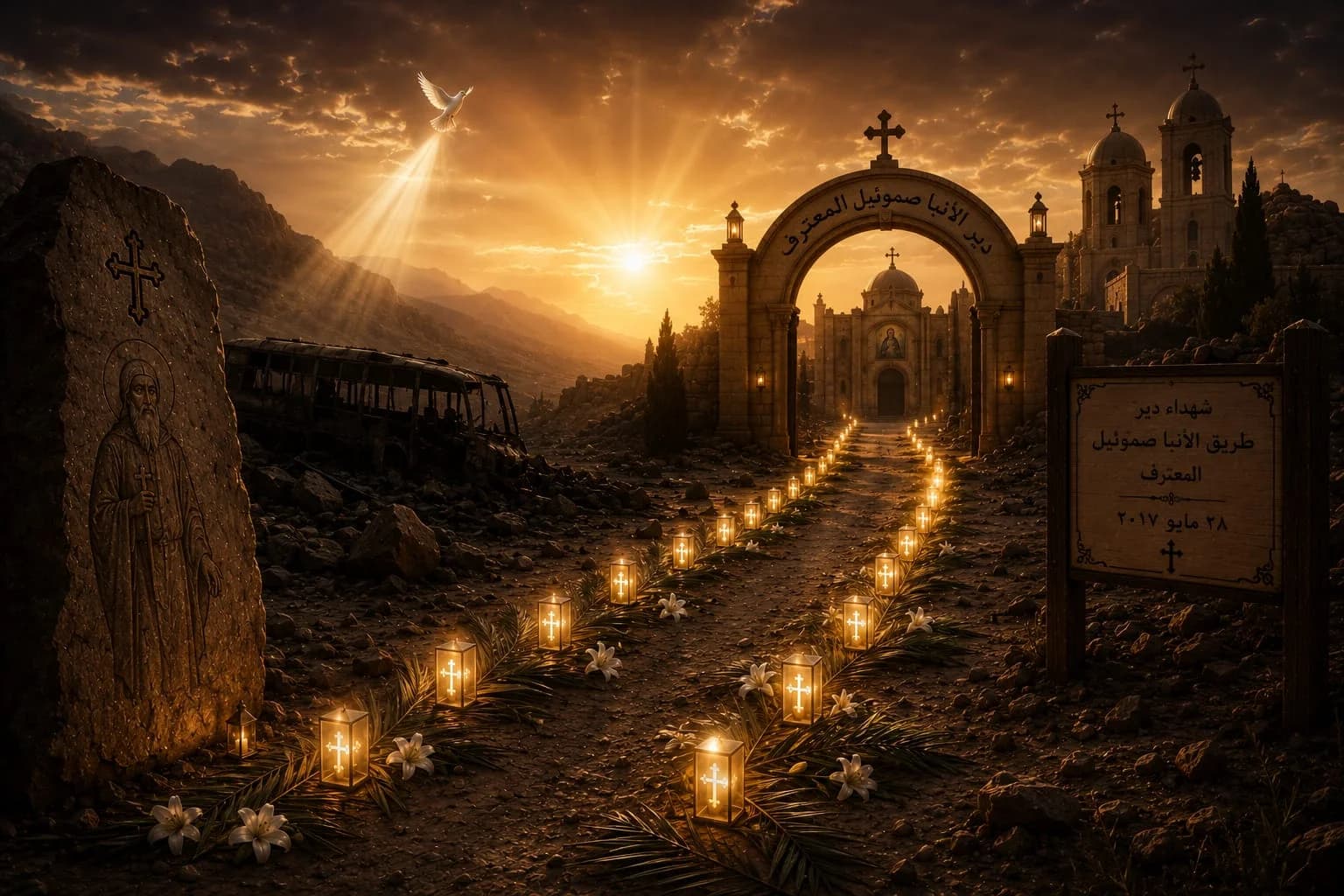
Vehicles carrying Coptic Christian families traveling to visit the Monastery of Saint Samuel the Confessor in the Qalmon Mountains, west of Minya Governorate, were attacked in a terrorist assault. Approximately 28 to 29 people — including children, women, and men — were killed, and more than 24 others were injured. The Coptic Orthodox Church gave the martyrs of this day the title 'New Martyrs of Qalmon,' and an annual memorial is held on 26 May.
2017 · Modern revival
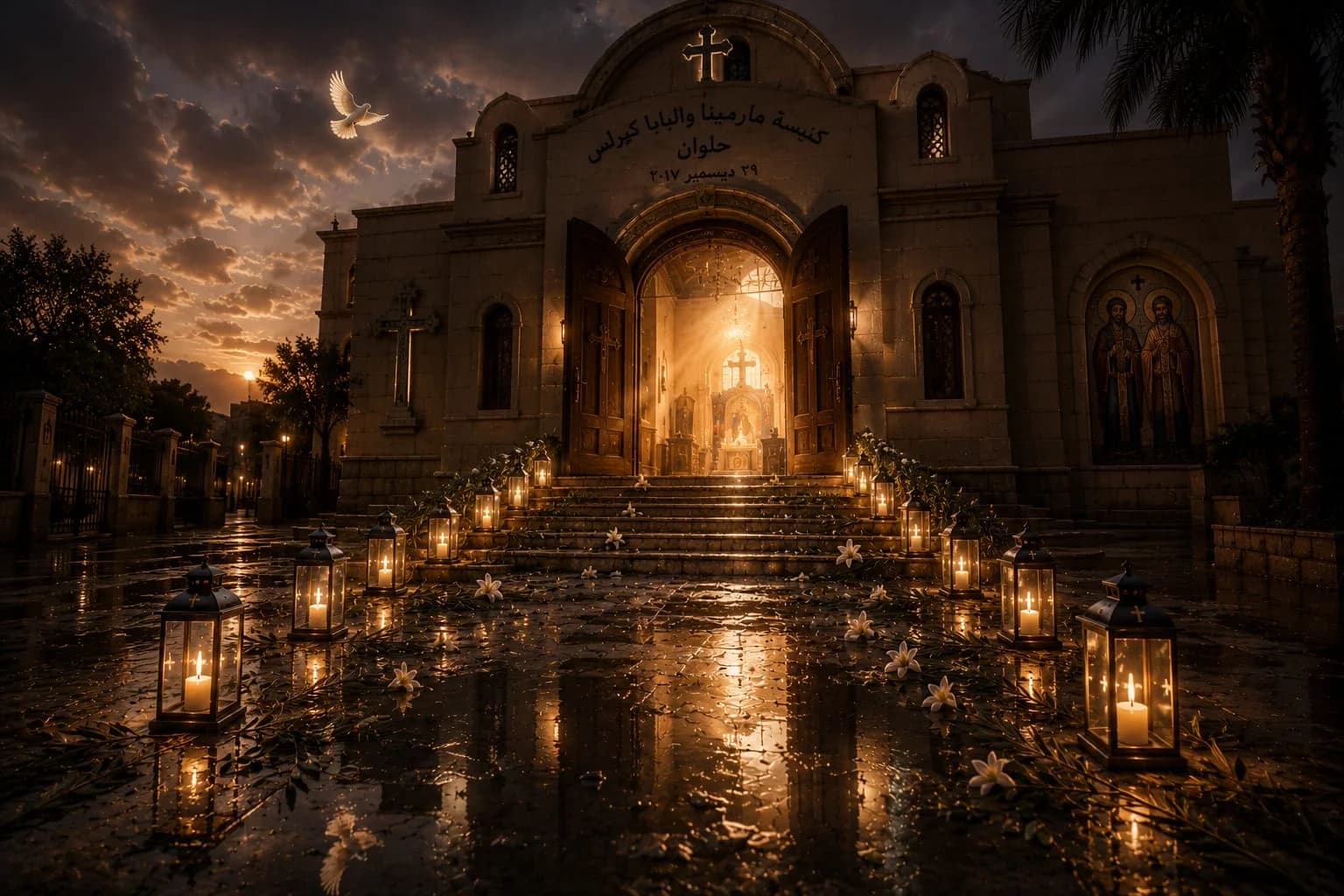
29 December 2017
A terrorist launched an armed attack on the Church of the Martyr Mar Mina the Miracle-Worker and Pope Kyrillos VI in the Helwan district south of Cairo, during preparations for Christmas celebrations. The attack killed 8 Christians and a police conscript who was part of the church security detail. Additionally, two brothers were killed in a separate assault by the same terrorist at a nearby commercial establishment, bringing the total death toll to 10, with 5 others injured. ISIS claimed responsibility for the attack that evening.
2017 · Modern revival
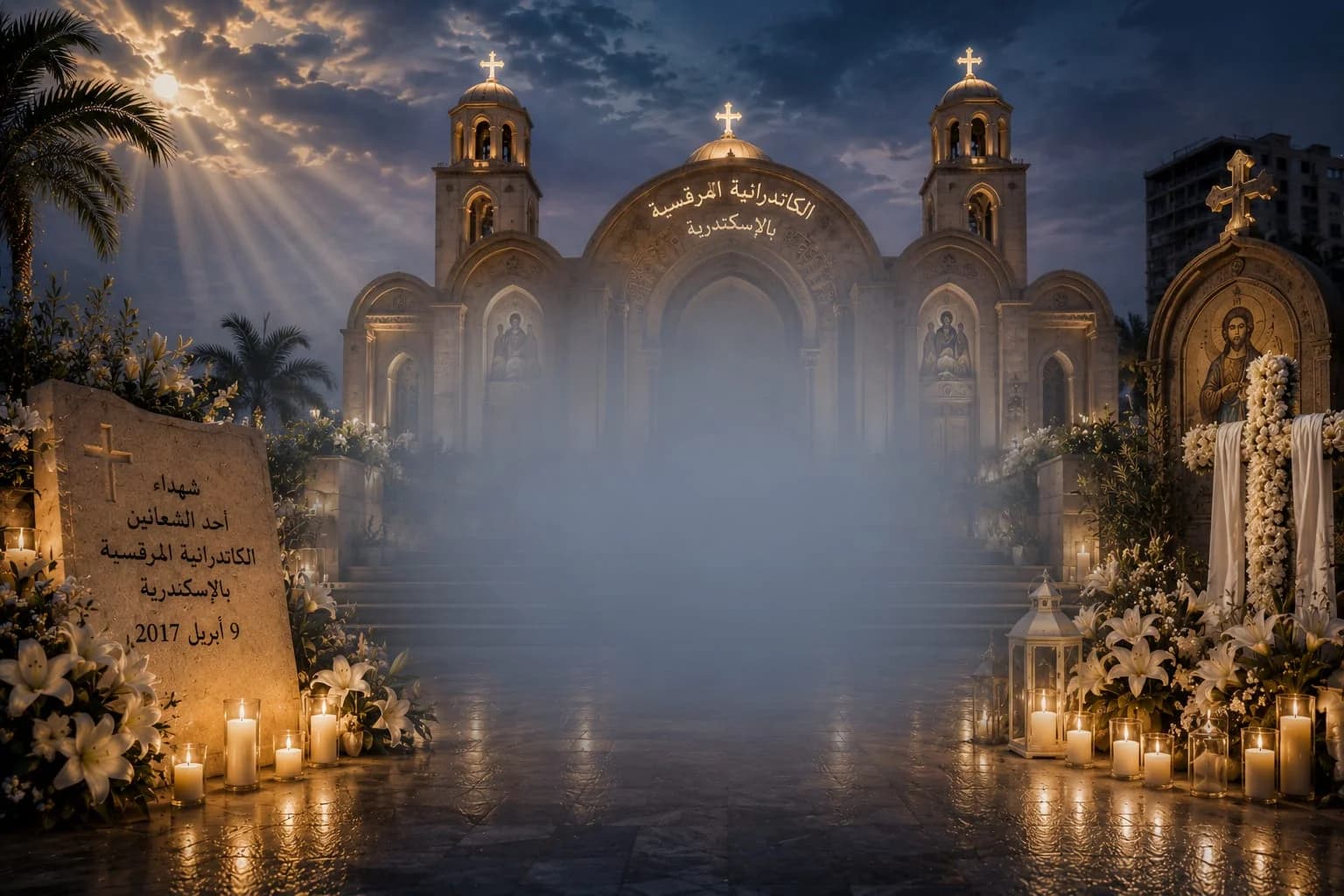
9 April 2017
A suicide bomber detonated himself at the security gate of the Coptic Orthodox Cathedral of Alexandria in the Ramel Station district, while Pope Tawadros II was inside the church presiding over the Palm Sunday liturgy. The explosion killed 18 people, including several police officers and soldiers who confronted the bomber and prevented him from entering the church, and injured dozens more. ISIS claimed responsibility for the attack, which became known alongside the Tanta bombing as the 'Palm Sunday Bombings.'
2019 · Modern revival
21 April 2019
The attacks targeted three churches and four luxury hotels in near-simultaneous explosions. (The churches: St. Anthony's Shrine in Colombo, St. Sebastian's Church in Negombo, and Zion Evangelical Church in Batticaloa.)
2022 · Modern revival
22 June 2025
A lone suicide bomber entered the Greek Orthodox Church of Saint Elijah in the Christian district of Dweil'a in Damascus, opened fire on worshippers, and then detonated his explosive belt. Approximately 350 people were inside the church at the time of the attack. Surveillance camera footage showed the bomber entering the church alone, followed by the sounds of gunfire and an explosion that shattered the church windows.
2025 · Modern revival
22 June 2025
A lone suicide bomber entered the Greek Orthodox Church of Saint Elijah in the Christian district of Dweil'a in Damascus, opened fire on worshippers, and then detonated his explosive belt. Approximately 350 people were inside the church at the time of the attack. Surveillance camera footage showed the bomber entering the church alone, followed by the sounds of gunfire and an explosion that shattered the church windows.